

What AI Is Actually Doing to Software Development — And Why It Matters More Than You Think
The business leaders most affected by AI in software development are usually not the ones writing the code. They are the CTOs evaluating development partners, the founders deciding how much development budget to allocate, the product managers setting delivery timelines, and the executives asking whether their software development spend is producing better outcomes than it did two years ago. For these people, the headline AI statistics — “developers complete tasks 55% faster” — are simultaneously impressive and insufficient. They do not tell you what the faster completion rate means for your specific project, your timeline, your security posture, or your ability to evaluate whether you are getting what you are paying for.
This guide is written for that audience. It maps what AI is genuinely changing in the software development lifecycle, presents the productivity data in the context that makes it actionable, and then — critically — surfaces the risks that the productivity narrative consistently understates. Because the risk side of AI in software development is where the most consequential decisions for business leaders are concentrated.
The Numbers Business Leaders Need — In the Context That Makes Them Useful
The productivity statistics for AI coding tools are real. The task completion speed improvements are measured in controlled studies, not anecdotes. But translating these numbers into expectations for your development project requires understanding both where they apply and where they do not.
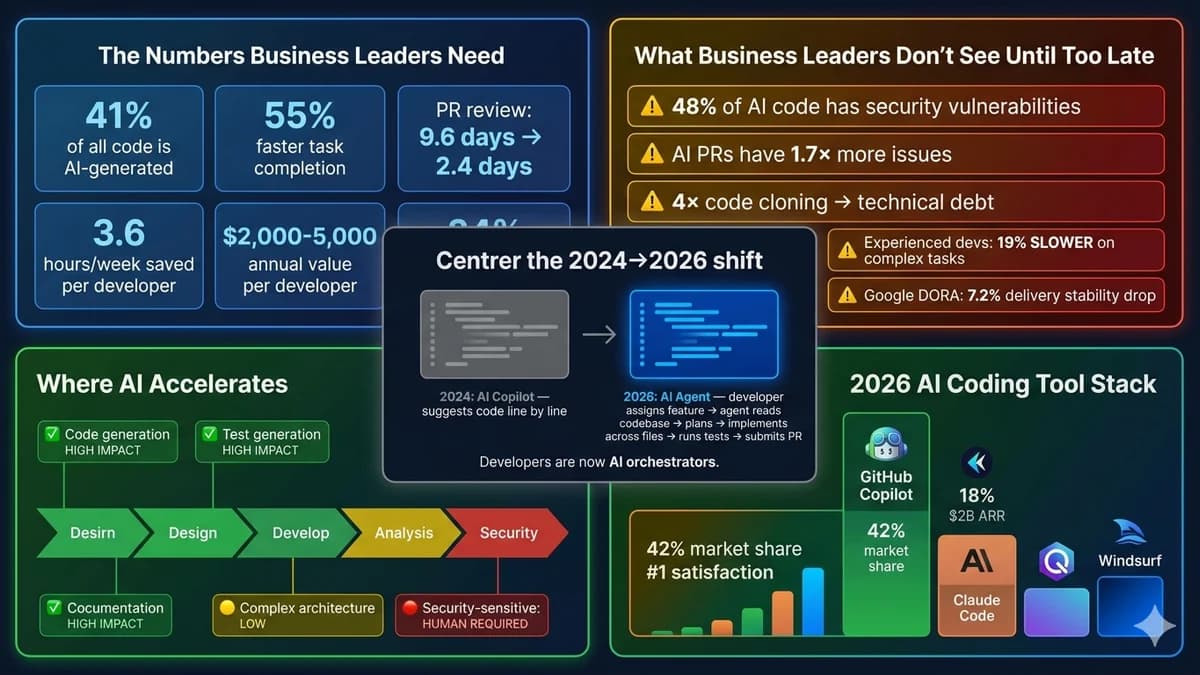
55% faster task completion (GitHub Copilot research with Accenture): This figure comes from controlled studies where developers completed defined tasks — code generation, debugging, documentation — using AI tools vs without. It is the best-case scenario for clearly defined, well-scoped tasks. The same research also shows that experienced developers are 19% slower on complex, novel architectural problems with AI tools — because evaluating AI suggestions adds friction to thought processes that previously flowed without interruption. The practical expectation for business leaders: AI tools produce 20-30% timeline improvements on standard feature development and well-scoped tasks. Complex greenfield architecture, security-sensitive components, and highly novel domain problems see smaller gains and sometimes negative impacts.
PR review time: 9.6 days → 2.4 days: This is one of the most concrete pipeline improvements from AI tool adoption. AI coding tools accelerate the initial code production, and AI-assisted review tools help surface issues faster. But this improvement must be balanced against the 1.7× higher issue rate in AI-authored pull requests — which means review quality and automated scanning are more critical than ever, not less. A faster PR process with inadequate review is worse than a slower PR process with thorough review.
3.6 hours per week per developer ($2,000-$5,000 annual value): This is the average time saved per developer measured across 135,000+ developers in DX's Q4 2025 analysis. At £60/hour and a 48-week working year, 3.6 hours/week translates into thousands of dollars in annual value per developer. The distribution is wide: daily users save significantly more; irregular users save significantly less. For a business commissioning AI-assisted development services, this translates to a real reduction in developer hours required per feature — which should be visible in velocity metrics and delivery timelines if the development partner is genuinely using AI tools at depth.
What AI Genuinely Delivers
- 55% faster task completion on well-defined problems
- 3.6 hours/week saved per developer (average across 135K+ devs)
- PR review time: 9.6 days → 2.4 days in pipeline
- 126% more projects completed per week by top AI users
- 50% faster unit test generation and debugging
- 13.6% fewer errors per line in AI-assisted code
- 26-39% productivity gains for junior developers
- 74% of developers focus on higher-value tasks
- 84% successful builds among Copilot users (vs control)
What the Headlines Often Miss
- 48% of AI-generated code has security vulnerabilities
- AI PRs have 1.7× more issues than human-written code
- Experienced developers: 19% SLOWER on complex tasks
- 4× increase in code cloning → rising technical debt
- 7.2% decrease in delivery stability (Google DORA report)
- Only 30% of AI suggestions are accepted by developers
- 11 weeks average ramp time before productivity gains materialise
- 57% of AI-generated APIs publicly accessible when they shouldn't be
- Gains are task-dependent — not uniform across all work
Where AI Accelerates the Software Development Lifecycle — and Where It Does Not
AI tools are not uniformly effective across the software development lifecycle. The gains are concentrated in specific phases and specific task types. Understanding this distribution tells you where to expect timeline compression and where timeline expectations should remain conventional.
Code Generation — Boilerplate, Standard Patterns, CRUD Operations
The highest-impact AI application in the SDLC. AI tools generate first-draft code for standard patterns — CRUD operations, API endpoints following established conventions, form validation, data transformation functions — at high accuracy and speed. Developers review and adjust rather than write from scratch. GitHub Copilot generates an average of 46% of code written by users; Java developers reach 61%.
Unit Test Generation and Debugging Assistance
One of the clearest ROI areas for AI in development. Generating unit tests for existing functions, identifying potential edge cases, and scaffolding test suites are tasks where AI produces high-accuracy output quickly. Small companies see up to 50% faster unit test generation and debugging. Developers save 30-60% of time on test generation and documentation when using AI tools.
Code Documentation and Explanation
AI tools generate high-quality inline documentation, README files, API documentation, and code explanations from existing code. This is one of the most consistently high-quality AI output categories — documentation does not carry the security risk profile of code generation and produces immediate value. Teams save significant time on documentation that was previously deprioritised due to deadline pressure.
Code Review Assistance and Refactoring
AI code review tools (GitHub Copilot code review, CodeRabbit, Sourcegraph Cody) surface common patterns, flag potential issues, and suggest improvements. They do not replace senior developer code review — they augment it by handling pattern-matching checks so reviewers focus on architectural and logic issues. Reviewers approve Copilot-authored code about 5% more often than non-AI code.
Complex Architecture and Novel Domain Problems
The one area where AI tools often add less value — and can add friction. Experienced developers working on genuinely novel architectural decisions, complex multi-system integration design, or problems without clear precedent in the training data are 19% slower with AI tools than without them. The cognitive overhead of evaluating irrelevant suggestions interrupts the focused thinking that complex problem-solving requires.
Security-Sensitive Components (Authentication, Payments, Data Access)
AI-generated code has a 48% security vulnerability rate and AI-generated APIs show 89% insecure authentication patterns. Authentication flows, payment processing, PII handling, and data access control layers should not be AI-generated without deep security review by a developer with specific security expertise. The speed gain is not worth the liability in these components.
Building a software product in 2026 and want to understand how Automely uses AI tools in development — and specifically what our code review and security scanning process looks like for AI-assisted code?
Free 45-minute consultation. We'll walk through our AI-assisted development workflow, our security standards for AI-generated code, and how we maintain code quality while delivering faster timelines.
The Risks Nobody Shows You — And Why They Matter More Than the Speed
The speed gains from AI coding tools are the number every development agency mentions in their pitch. The security risks are the number nobody volunteers. For a business leader making decisions about software development services, the security profile of AI-generated code is more consequential than the timeline improvement — because a 20% faster delivery that introduces a critical authentication vulnerability is not a win. It is a liability that will cost significantly more to remediate than the time saved.
48% of AI-generated code contains security vulnerabilities (independent security research across multiple studies). 40% of GitHub Copilot-generated programs were flagged for insecure code in controlled studies. 57% of AI-generated APIs are publicly accessible when they should not be. 89% of AI-generated APIs rely on insecure authentication methods. Pull requests containing AI-generated code have 1.7× more issues than human-written code (CodeRabbit analysis of production repos). These are not edge cases — they are the consistent statistical profile of AI-generated code across multiple independent research datasets in 2025-2026.
The resolution is not to avoid AI coding tools — they produce measurable value when used correctly. The resolution is to implement the safeguards that responsible AI-assisted development requires: mandatory automated security scanning on every AI-assisted commit, human security review for authentication and data access components, explicit policies about which code paths require human-only authorship, and anomaly detection for code cloning patterns (AI tools produce 4× the code cloning rate of human developers, increasing technical debt systematically over time).
A development team that uses AI tools to ship 30% faster but skips the security review step is producing faster technical debt and faster security liability — not faster value. The question to ask any development partner: not “do you use AI tools?” but “what is your security review and scanning process for AI-generated code, and can you show me your policy for security-sensitive components?”
The Shift from Copilots to Agents — The Most Important Change in 2026
The most significant change in AI software development between 2024 and 2026 is not an improvement in suggestion quality. It is a fundamental architectural shift in how AI interacts with the development process — from copilots that suggest code to agents that implement features.
AI as suggestion layer
- Developer types code; AI completes lines and functions
- AI responds to the developer's current cursor position
- Developer accepts or rejects each suggestion individually
- AI has no memory of the broader codebase context
- Developer is the primary actor; AI is the assistant
- Productivity gain: individual task speed
AI as implementation layer
- Developer assigns a feature or task to the agent
- Agent reads and indexes the entire codebase
- Agent plans the implementation across multiple files
- Agent writes code, runs tests, iterates on failures
- Agent submits a complete PR for developer review
- Developer validates, reviews, and manages exceptions
- Developer is the orchestrator; AI is the implementer
Anthropic's 2026 Agentic Coding Trends Report documents this shift: developers now function more as AI orchestrators — directing agents, validating results, and making architectural decisions — than as primary code authors. Modall's April 2026 research states the implication directly: “for teams evaluating AI-assisted development workflows, the distinction between ‘tools that help you code’ and ‘agents that code for you’ is now the most important architectural decision in the stack.”
For business leaders: agentic coding means smaller development teams can deliver at throughputs previously requiring larger teams. GitHub's Project Padawan enables developers to assign issues to Copilot and review completed work. Cursor supports up to 8 simultaneous parallel agents working on different aspects of a task. The bottleneck has shifted from code writing to code review and validation — which means the most important investment in an AI-assisted development team in 2026 is not more developers but better code review discipline and security scanning infrastructure.
The 2026 AI Coding Tool Landscape — What Your Development Team Should Be Using
| Tool | Type | Key Stats | Best For |
|---|---|---|---|
| GitHub Copilot | Copilot + Agent mode | 20M+ users. 4.7M paid subscribers (+75% YoY). 42% market share. 90% Fortune 100. $10-39/user/month. | Enterprise teams standardised on GitHub. Broadest IDE integration. Agent mode for multi-file feature implementation via Project Padawan. |
| Cursor | AI-native IDE | 18% market share. $2B ARR. Up to 8 parallel agents. $20-40/month. | Developers wanting deepest agentic coding integration. Purpose-built AI-native environment. Best for teams willing to shift entire IDE workflow. |
| Claude Code (Anthropic) | Agentic coding agent | #1 developer satisfaction at 46%. Terminal-based. Runs in existing environments. | Developers wanting agentic coding in terminal without switching IDE. Deepest codebase understanding. Strong for multi-step complex tasks. |
| Amazon Q Developer | Copilot + agent | 57% faster task completion (AWS data). MCP integration for agent tool use. | Teams on AWS infrastructure. CLI integration with AWS-specific knowledge. Best value for AWS-native development teams. |
| Windsurf (Codeium) | AI-native IDE | 1M+ active users. #1 LogRocket AI Dev Tool Power Rankings Feb 2026. | Alternative to Cursor. Strong developer satisfaction. Competitive with Copilot at lower price point. |
The market has moved well beyond a single-tool discussion. The most effective AI-assisted development teams in 2026 typically use a combination: a primary IDE tool (Copilot or Cursor) plus an agentic tool for larger feature implementation (Claude Code or Copilot agent mode) plus automated security scanning (Snyk, SonarQube, or Veracode) to catch the vulnerability patterns that AI code reliably produces. A development partner that is “using AI tools” but only using autocomplete features is not capturing the productivity advantage that the 2026 agentic tooling makes available.
5 Questions to Evaluate Software Development Services in the AI Era
The right question for evaluating an AI software development services partner in 2026 is not “do you use AI tools?” — the answer is yes for virtually every team of any competence. The questions that reveal whether they are using AI tools responsibly and at genuine depth are more specific.
What is your AI tooling stack — at what depth, and for which phases of development?
A partner using GitHub Copilot for autocomplete vs one running Claude Code agents for feature-level implementation represents a fundamentally different productivity profile. Ask specifically: are you using agentic coding tools? For which task types? Can you show velocity data — story points per sprint, PR cycle times — that demonstrates the productivity impact?
What is your code review and security scanning process for AI-generated code?
Given the 48% AI code vulnerability rate and 1.7× higher issue rate in AI PRs, responsible AI-assisted development requires: automated security scanning on every AI-assisted commit, human security review for authentication/payment/data access components, and explicit policies about code paths that require human-only authorship.
How do you manage technical debt from AI-generated code?
AI tools produce 4× the code cloning rate of human developers (GitClear 2025 research). Code cloning — duplicate logic across the codebase — creates long-term maintainability issues that compound over time. Ask specifically about anti-duplication practices and how AI-generated code is reviewed for DRY (Don't Repeat Yourself) violations before merging.
What is your policy for AI-generated code in security-sensitive components?
Authentication flows, payment processing, PII handling, and data access control components are where the 89% insecure authentication pattern in AI-generated APIs creates direct production liability. A responsible development partner has an explicit, written policy about what AI can and cannot generate in these areas.
How does your pricing reflect AI productivity gains — and does the client benefit?
If AI tools produce 20-30% faster development, the fair question for any client is: does your pricing reflect this productivity gain, or are you billing the same hours and keeping the efficiency benefit? Different commercial models are legitimate — fixed-price projects where the partner keeps the efficiency upside; time-and-materials where efficiency gains reduce the invoice. What is not legitimate is billing for AI productivity as if it were human hours.
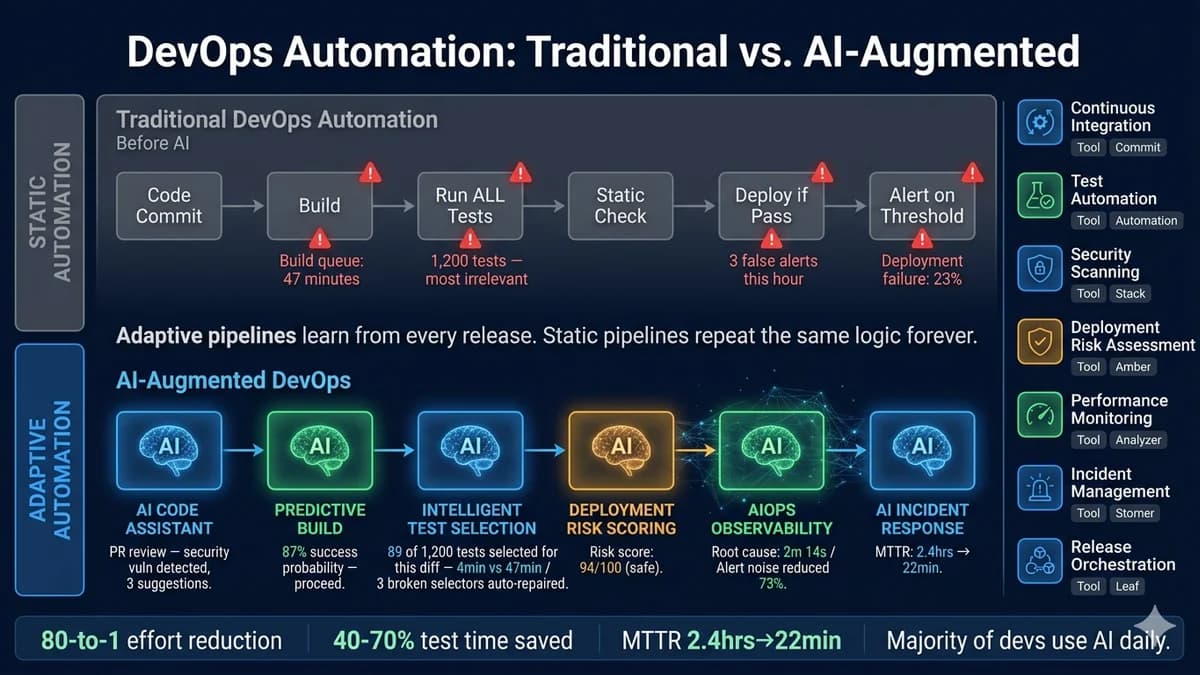
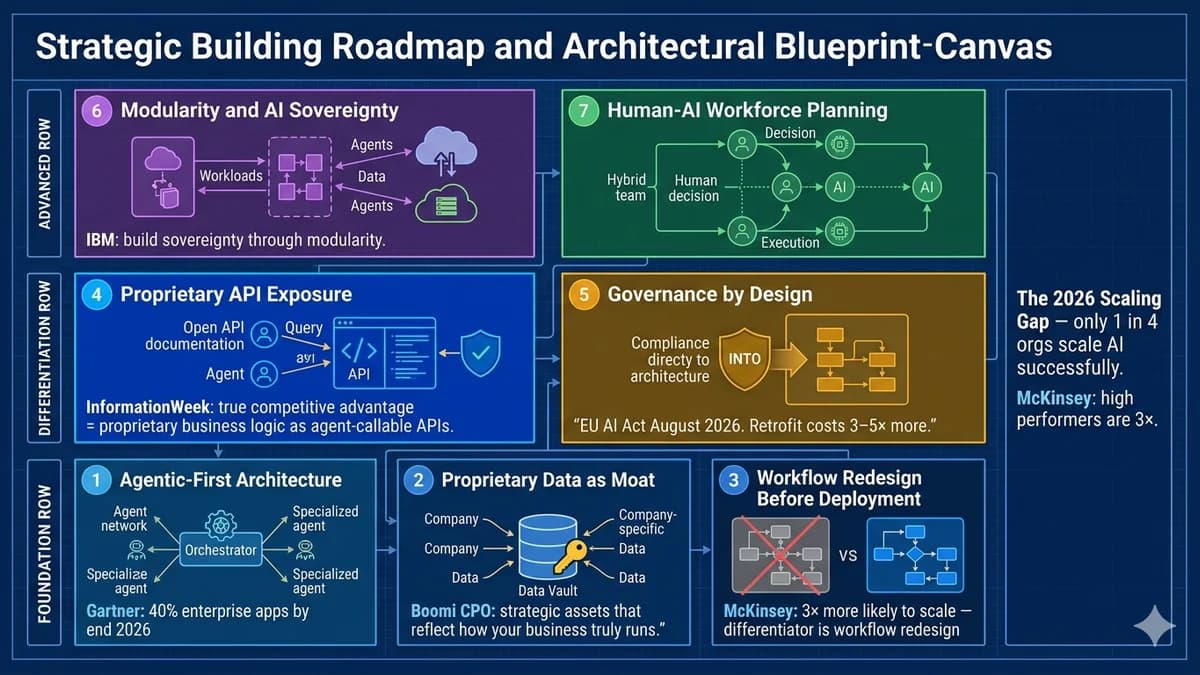
For the broader context on where AI development is heading, see our 7 AI development priorities for 2026 and the companion DevOps automation guide that maps the pipeline-side impact.
Evaluating AI software development services and want a partner who can answer all 5 of these questions with specifics — and show you their security standards for AI-generated code?
Automely builds AI-integrated products and custom AI agents using agentic coding tools with rigorous security standards and transparent pricing. Free 45-minute consultation.