



Blockchain Development Services — Web3 & Smart Contracts
Hire dedicated blockchain developers who build secure, audited, production-ready decentralised applications — without the risk of freelancers who disappear or agencies that overbill.
Security-first development • EVM & Solana • Testnet validation before mainnet • NDA on day oneClients Served
Projects Delivered
Average Onboarding
Clutch & GoodFirms
Blockchain's Reputation Problem Starts with Bad Development
Blockchain development has a reputation problem. Not because the technology is flawed — but because most implementations are rushed, under-audited, and built by developers who learned Solidity last month. Smart contract bugs are not fixable after deployment. They are exploited. Hundreds of millions of dollars have been lost to vulnerabilities that a proper development process would have caught.
Automely provides dedicated blockchain developers with real production experience on Ethereum, Solana, and EVM-compatible chains. We build smart contracts that are reviewed before deployment. We build Web3 applications that work for non-crypto-native users. And we build DeFi and NFT platforms with security, usability, and regulatory awareness at their core.
We will also tell you honestly if blockchain is not the right solution for your use case. If a traditional database solves the problem better, we will say so. Our job is to help you build something that works — not to over-engineer for the sake of being on-chain.
WHAT WE BUILD
Our Blockchain Development Services
Every blockchain project we take on is reviewed before deployment, tested on testnet, and built with the security practices that production smart contracts demand.
Smart Contract Development
Custom smart contracts on Ethereum, Polygon, BNB Chain, Avalanche, and Solana. Token contracts (ERC-20, ERC-721, ERC-1155), governance, staking, vesting, and custom protocol logic — reviewed before deployment. Best for: Projects that need trustless, on-chain business logic — token launches, protocol mechanics, DAO governance, and any application where immutability and transparency are requirements.
Build Your Smart Contracts →DeFi Platform Development
Decentralised exchange (DEX) interfaces, liquidity pool management, yield farming mechanics, lending protocols, and DeFi dashboards. Built with gas optimisation and MEV resistance as standard. Best for: Teams building DeFi protocols, projects adding DeFi features to existing products, and businesses creating financial tooling on-chain.
Build Your DeFi Platform →NFT Marketplace Development
End-to-end NFT marketplace development: minting, listing, auctions, royalty enforcement, and collection management. Custom marketplaces or builds on OpenSea protocol — on Ethereum, Polygon, or Solana. Best for: Artists and creators launching NFT collections, gaming projects with on-chain assets, and brands building loyalty or membership NFT programmes.
Build Your NFT Marketplace →Web3 Application Development
Frontend and backend for Web3 apps: wallet connection (MetaMask, WalletConnect, Phantom), on-chain data reads, transaction management, and UX designed for mainstream users — not just crypto natives. Best for: Products that need a polished Web3 frontend, teams whose smart contracts need a user-facing interface, and businesses building consumer Web3 experiences.
Build Your Web3 App →Token & Tokenomics Design
ERC-20 and SPL token development, tokenomics design, vesting schedules, DAO governance structures, and multi-sig treasury management. Built for projects that need economic models to hold long-term. Best for: Projects launching utility or governance tokens, DAOs building on-chain governance, and businesses designing token incentive structures.
Design Your Tokenomics →Blockchain Integration for Existing Products
Embed blockchain functionality into an existing web or mobile product — wallet authentication, on-chain credentialing, token gating, NFT issuance, or payment settlement on-chain. Best for: Web2 businesses adding Web3 features, brands launching token-gated communities, and companies exploring on-chain credentialing or loyalty systems.
Integrate Blockchain →HOW WE WORK
Our Blockchain Development Process
Six stages from chain selection to mainnet monitoring. Every blockchain project follows this process — with security built in at every step.

01
Requirements & Chain Selection
We analyse your use case, user base, transaction volume, and regulatory context to recommend the right blockchain. Ethereum for maximum security. Polygon or BNB Chain for lower gas. Solana for high-throughput applications. Deliverable: A chain selection recommendation with rationale, covering security, cost, ecosystem fit, and user experience trade-offs.
02
Smart Contract Architecture
Contract design, state variable layout, function mapping, access control structure, and upgrade strategy. We document the architecture before writing code. Deliverable: A smart contract architecture document covering state design, function specification, access control, and upgrade/migration strategy.
03
Smart Contract Development
Solidity or Rust development following security-first patterns. OpenZeppelin standards used wherever applicable. NatSpec documentation for every function. Deliverable: Fully written and documented smart contracts in a version-controlled repository with unit test coverage.
04
Testing & Security Review
Unit tests covering every function, integration tests covering full user flows, and a security review against OWASP Smart Contract Top 10 and known vulnerability patterns. Testnet validation before mainnet. Deliverable: Full test suite, security review report, and testnet deployment confirmation.
05
Frontend & Web3 Integration
React/Next.js frontend with wagmi, viem, or ethers.js for Ethereum. Solana web3.js or Anchor for Solana. Wallet connection flows, transaction feedback UI, and error handling for the full range of Web3 edge cases. Deliverable: Fully integrated Web3 frontend tested across all supported wallets and networks.
06
Mainnet Deployment & Monitoring
Managed mainnet deployment, contract verification on Etherscan/Solscan, event monitoring, and an admin interface for ongoing management. Post-launch support for upgrades and incident response. Deliverable: Verified contracts on mainnet, monitoring dashboard, and a post-deployment support plan.
Why Businesses Choose Automely Over Blockchain Freelancers and Agencies
Blockchain development has higher stakes than most software engineering — a deployed contract with a vulnerability cannot be patched, only migrated. Automely's security-first process is designed to prevent the mistakes that cost projects millions.
The Problem You Face
What Automely Does Differently
You found a Solidity freelancer but cannot verify the security of their code
Every smart contract we write is reviewed against known vulnerability patterns and tested on testnet before mainnet deployment
A previous developer deployed a contract with a bug that was exploited
We build with security-first patterns (Checks-Effects-Interactions, OpenZeppelin standards) and recommend formal auditing before any TVL-significant deployment
Your Web3 app only works for users who already have a wallet — conversion is terrible
We build progressive Web3 UX: email login, embedded wallets, and fiat on-ramps so non-crypto users can participate
Your NFT project launched but secondary royalties do not enforce properly
We implement ERC-2981 royalty standards and test enforcement across major marketplace protocols before launch
You need blockchain integrated into your existing product but your dev team does not know Web3
We provide dedicated blockchain developers who integrate Web3 functionality into your existing stack without disrupting ongoing development
You deployed on mainnet and discovered the contract cannot be upgraded
We design upgrade strategies (proxy patterns, migration paths) upfront — before the first line of contract code is written
Blockchain Results — Real Projects, Measurable Outcomes
Below are examples of blockchain projects delivered by Automely. Every deployment is security-reviewed, tested on testnet, and built to production standards.
Confidential — NFT gaming studio
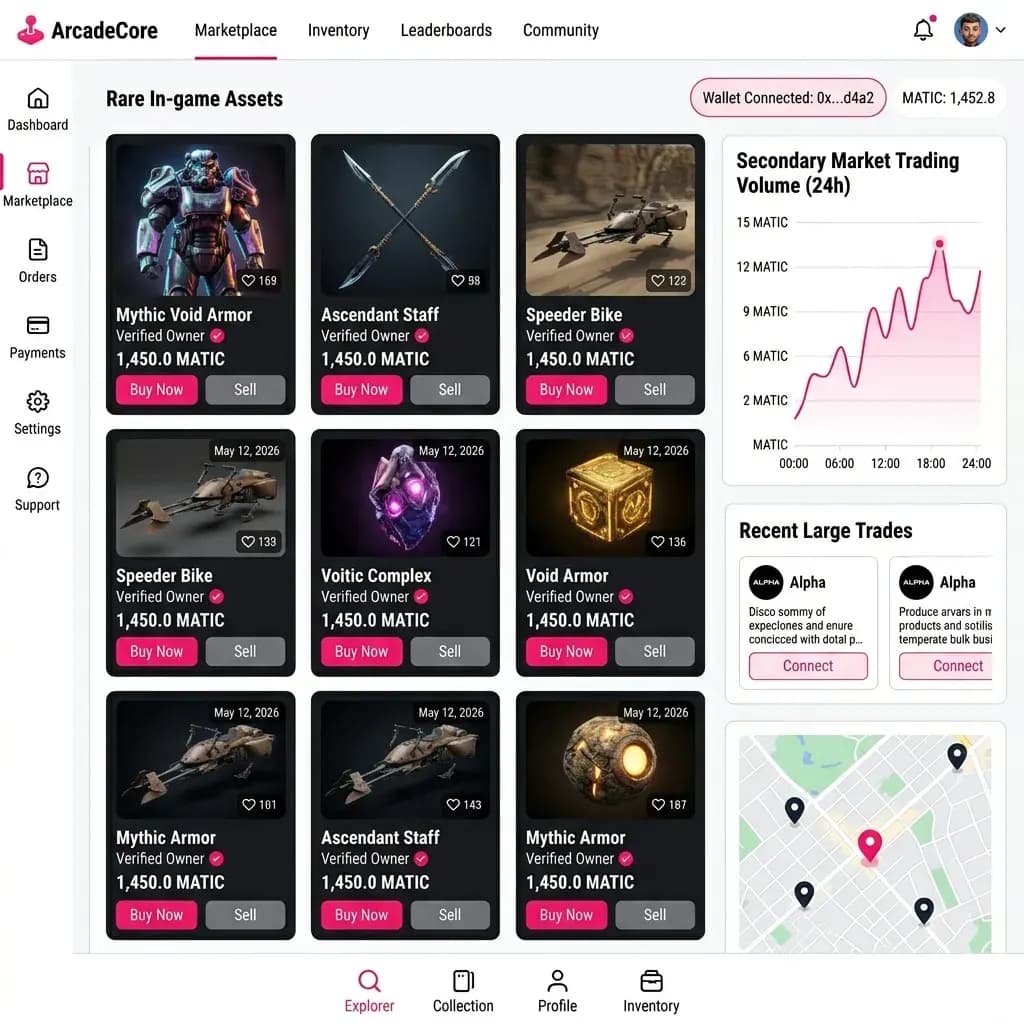
NFT Marketplace & In-Game Asset System
Confidential — NFT gaming studio
Challenge: The studio had a mobile game with strong retention but wanted to add on-chain asset ownership to enable a secondary market and increase the perceived value of rare in-game items. What We Did: Automely built a custom ERC-1155 contract for in-game assets, a Polygon-based marketplace frontend for secondary trading, and a game-side API integration to sync on-chain ownership with in-game state. All contracts were reviewed before deployment. Result: Marketplace launched without exploits. Secondary trading volume exceeded the studio's 30-day projection in the first week. Average revenue per user increased 23% in the 60 days following launch.
23%
ARPU increase post-launch
0
Security exploits on launch
USE CASES
Blockchain Applications We Build
Our blockchain developers understand the specific technical requirements, security considerations, and user experience challenges for each use case below.

DeFi
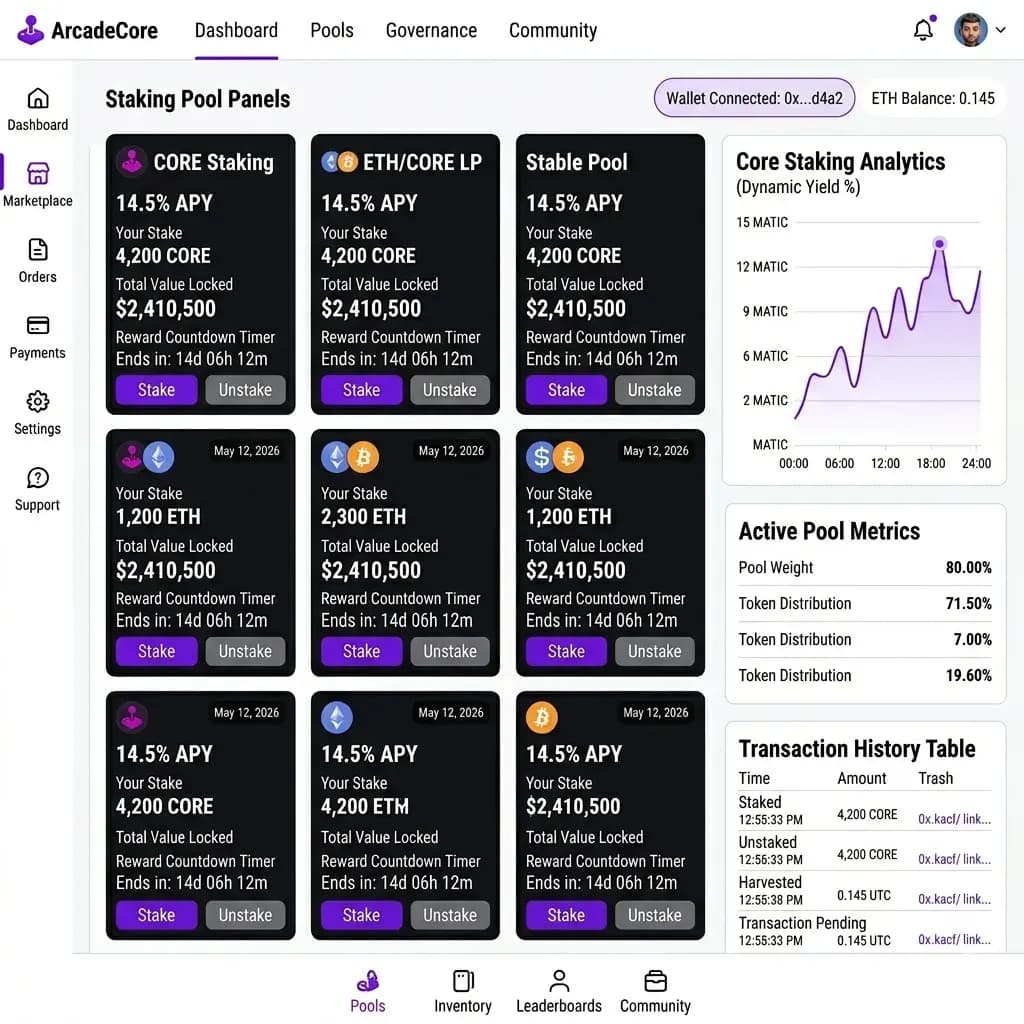
DEX interfaces, liquidity pools, yield protocols, lending platforms, and stablecoin mechanisms. We build DeFi applications with gas optimisation, MEV resistance, and the security practices that high-TVL protocols demand.
DeFi Development
NFT & Digital Collectibles
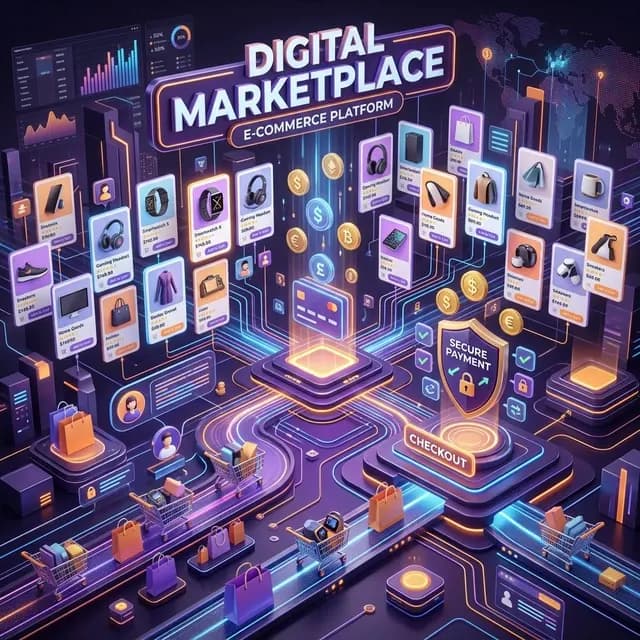
Generative NFT launches, gaming asset systems, digital art platforms, and loyalty NFTs. We handle the smart contracts, IPFS metadata, and marketplace frontend — end to end.
NFT Development
Web3 Gaming
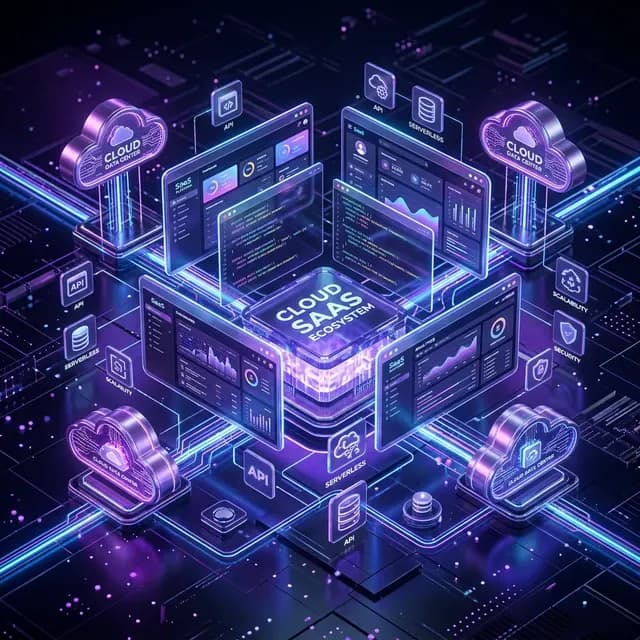
On-chain asset ownership, play-to-earn mechanics, and tournament prize distribution. We build the smart contract layer and Web3 integration for game studios entering the blockchain space.
Web3 Gaming Development

RWA (Real World Assets)
Tokenisation of property, bonds, invoices, and other off-chain assets. We build the smart contract infrastructure and legal-compliant token structures for RWA projects.
RWA Tokenisation

DAO & Governance
Governance token contracts, on-chain voting, treasury management, and contributor reward systems. We build DAO infrastructure that is secure, gas-efficient, and usable by non-technical community members.
DAO Development
Enterprise & Consumer Web3
Supply chain provenance, credential verification, token-gated communities, NFT membership programmes, and loyalty reward systems. We build blockchain solutions where the technology genuinely improves the product.
Enterprise Blockchain
FREQUENTLY ASKED QUESTIONS
Blockchain Development — Questions We Hear Every Week
What is a smart contract?
A smart contract is a self-executing programme that runs on a blockchain. It contains business logic encoded in code. Once deployed, it executes automatically when its conditions are met — without any intermediary. Smart contracts are immutable: they cannot be changed after deployment unless built with upgrade patterns. They are transparent: the code is publicly readable on-chain. And they are trustless: they execute as written, regardless of what the parties involved want.
What is the difference between Ethereum and Solana?
Ethereum is the most widely adopted smart contract platform. It has the largest developer ecosystem, deepest DeFi composability, and strongest institutional trust. It uses Solidity as its primary smart contract language. Solana is a high-throughput blockchain built for speed and low transaction costs. It uses Rust with the Anchor framework. Ethereum suits most DeFi and enterprise use cases. Solana suits high-frequency, high-volume applications like gaming and consumer apps.
How much does blockchain development cost?
A simple token contract with a basic frontend costs $8,000–$20,000. A full DeFi protocol or NFT marketplace with a polished UI ranges from $30,000–$100,000. Complex multi-chain protocols with formal auditing can exceed $200,000. Gas optimisation, security review, and formal auditing add cost but are essential for any deployment handling significant value.
Do smart contracts need to be audited?
Any smart contract that will handle user funds or significant TVL should be audited by a specialist third-party firm before mainnet deployment. Smart contract exploits have resulted in losses exceeding $3 billion across the industry. An audit reduces the risk of the most common and highest-impact attack vectors. We will advise honestly based on your specific contract and risk profile.
What is an NFT marketplace?
An NFT marketplace is a platform where users can mint, buy, sell, and trade NFTs (non-fungible tokens) — unique on-chain assets representing digital art, gaming items, event tickets, membership access, or real-world ownership. An NFT marketplace handles wallet connection, collection creation, metadata storage on IPFS, listing and auction mechanics, royalty distribution, and payment settlement in ETH, SOL, or stablecoins.
What is DeFi?
DeFi (Decentralised Finance) refers to financial services built on smart contracts without centralised intermediaries. DeFi applications include decentralised exchanges for token swapping, lending protocols where users borrow against crypto collateral, yield farming platforms that generate returns on deposited assets, and stablecoin systems. DeFi protocols are permissionless and governed by on-chain mechanisms rather than corporate management.
Can you integrate blockchain into our existing web application?
Yes. Common integration patterns include wallet-based authentication as an alternative to email/password login, token gating (restricting content to holders of a specific NFT or token), on-chain payment settlement, and NFT issuance for loyalty rewards or event tickets. We assess your existing stack and integrate Web3 functionality cleanly without disrupting ongoing development.
Ready to Build Your Blockchain Application? Get a Dedicated Developer in 7 Days
Whether you are launching an NFT project, building a DeFi protocol, or embedding Web3 into an existing product, we will match you with a dedicated blockchain developer and have them onboarded within 7 days.
- Book a free 30-minute consultation — no pitch, just a focused conversation about your blockchain project
- Receive a scoped proposal within 48 hours
- We onboard your dedicated blockchain developer within 7 business days
NDA on day one • Security-first development • Ethereum, Polygon, BNB Chain & Solana