



Generative AI Development — Real GenAI, Not API Wrappers
Automely builds production-grade generative AI applications — custom LLM integrations, RAG systems grounded in your data, fine-tuned models for specialised domains, AI content pipelines, and fully custom GenAI products. We work with GPT-4o, Claude, Gemini, Mistral, and open-source models. We have shipped generative AI solutions across SaaS, FinTech, healthcare, legal, and e-commerce for clients in the USA, UK, and EU.
Production-grade engineering • Full source code ownership • USA & UK timezone • NDA before any discussionClients Served
Projects Delivered
Average Onboarding
Clutch & GoodFirms
What Is Generative AI — And What Can It Actually Do for Your Business
Generative AI creates new content — text, code, images, audio, data, and structured outputs — based on patterns learned from existing data. The most commercially significant systems today are large language models (LLMs) like GPT-4o, Claude, and Gemini. They write, reason, summarise, classify, extract, translate, and generate at a level not available before 2023.
The business use cases are broad and proven. AI writes first drafts of documents and reports. It reads and extracts structured data from unstructured sources. It answers customer questions from your knowledge base. It generates product descriptions at scale. It reviews code for security issues. It translates content for new markets. The question is not whether generative AI can help — it is which use case to build first.
Automely is a generative AI development company specialising in the engineering challenges that separate a working demo from a production system: prompt reliability, RAG accuracy, hallucination prevention, latency optimisation, cost management, and observability. We have shipped generative AI solutions across SaaS, FinTech, healthcare, legal, and e-commerce for clients in the US, UK, and EU.
By Hamid Khan · Last updated May 2026
WHAT WE BUILD
Our Generative AI Development Services
We build the full spectrum of generative AI applications — from LLM integrations and RAG systems to fine-tuned models and fully custom GenAI products.
LLM Application Development
We build applications that use the reasoning, generation, and analysis capabilities of large language models. Document analysis tools, intelligent search systems, automated report generators, AI writing assistants, content classification engines — all built on GPT-4o, Claude, Gemini, or Mistral and integrated directly into your product or operations. Best for: SaaS companies, content businesses, and operations teams who want to use LLM capability in a production application.
Build an LLM Application →RAG System Development
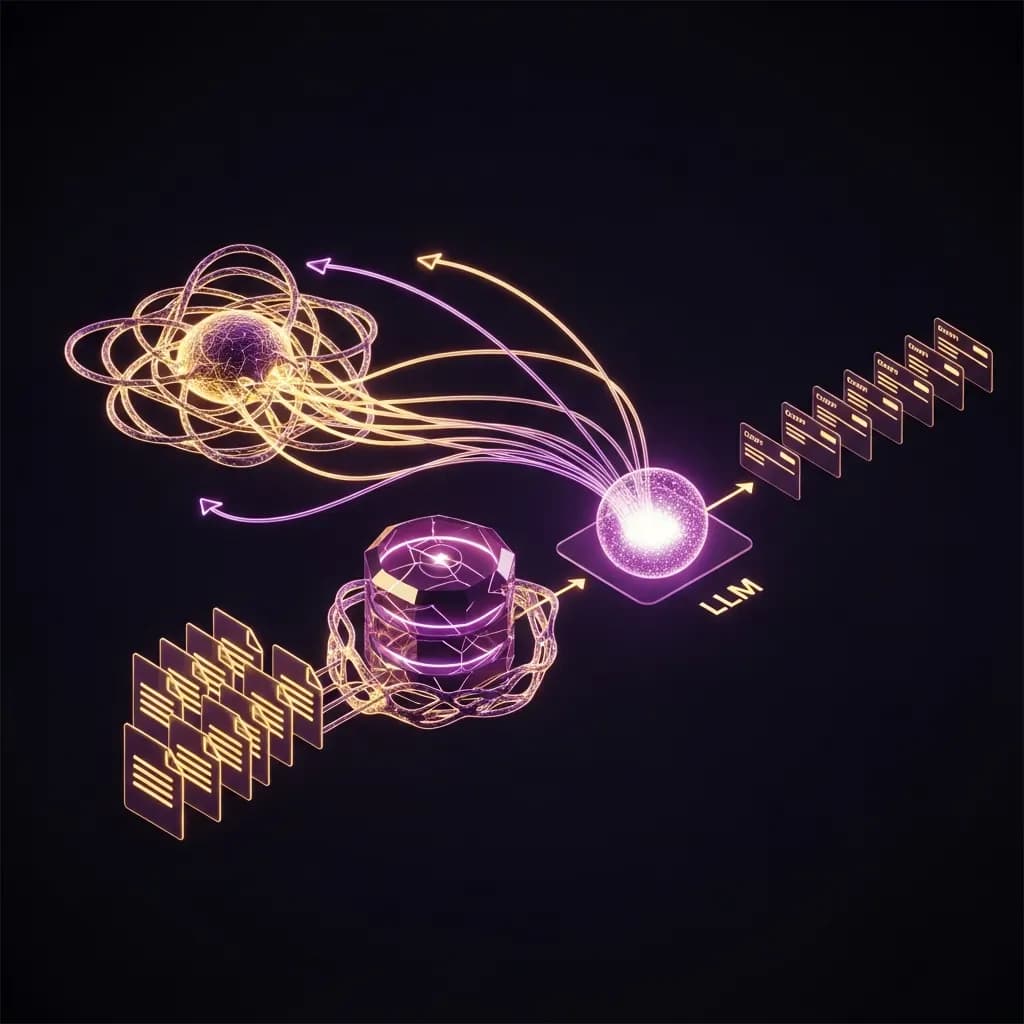
Retrieval-Augmented Generation is the technique that makes LLMs useful for business-specific applications. We design and build RAG systems that connect a language model to your documents, databases, knowledge base, and proprietary data. The AI generates responses grounded in your actual information — not hallucinated from training data. Best for: Any business that wants an AI that knows their specific products, policies, procedures, and customer context — not just general knowledge.
Build a RAG System →AI Content Pipeline Development
We build automated generative AI pipelines for content production at scale — product descriptions, blog article drafts, personalised email sequences, localised copy variants, social media content, and structured content for CMS platforms. These pipelines combine LLM generation with quality control layers, brand voice guardrails, and human review workflows. Best for: E-commerce businesses, content agencies, publishers, and marketing teams that need to produce high volumes of content without proportional headcount growth.
Build an AI Content Pipeline →Fine-Tuning and Model Customisation
When a foundation model needs to learn your domain — your terminology, your writing style, your classification taxonomy, your entity types — fine-tuning is the answer. We run supervised fine-tuning on GPT-4o, Mistral, and open-source models. The result is a model that performs significantly better on your specific task than a general-purpose foundation model. Best for: Businesses in specialised domains — legal, medical, financial, technical — where generic LLM outputs are not accurate or on-brand enough.
Fine-Tune a Model for Your Domain →Multimodal AI Development
Modern generative AI is not limited to text. We build applications that work with images, documents, audio, and video alongside text. Use cases include visual product inspection, document scanning and extraction, audio transcription and analysis, and AI-generated visual assets. Best for: Businesses with multimodal data needs — manufacturing quality control, media companies, document-heavy operations, and product-led teams.
Build a Multimodal AI Application →AI Product Development (Full Build)
We build complete generative AI products from scratch — scoped, designed, engineered, and shipped as a product your customers or team uses every day. If you have a generative AI product idea and need a technical partner to take it from concept to market, Automely is the team that builds it. Best for: Founders, product teams, and enterprises launching new AI-native products or AI-powered features.
Build Your Generative AI Product →HOW WE WORK
Our Generative AI Development Process
Every generative AI project we build follows this process. Each stage produces a concrete deliverable and a clear go/no-go decision point.

01
Use-Case Definition and GenAI Feasibility
We define the generative AI use case precisely — what the AI generates, what it should not generate, what data it needs access to, and what 'good output' looks like. We run a rapid feasibility assessment to confirm LLM capability for your specific task before committing to a full build. Deliverable: A use-case specification and feasibility assessment with confidence rating
02
Model Selection and Architecture Design
We evaluate foundation models against your task profile — capability, latency, context window, cost, compliance, and fine-tuning availability. We design the full application architecture: LLM selection, RAG design, prompt architecture, output processing, and integration points. Deliverable: A model selection recommendation and application architecture document
03
Data Preparation and RAG Pipeline Build
For RAG systems, we prepare your knowledge base — cleaning, chunking, embedding, and indexing documents into a vector database. We test retrieval accuracy before connecting the LLM to ensure the context provided to the model is high quality. Deliverable: A populated vector database with retrieval accuracy benchmarks
04
Prompt Engineering and Application Development
We engineer the system prompts, user prompts, and output formatting instructions that produce reliable, on-brand outputs. We build the application layer — the backend logic, API handlers, frontend interface, and all business system integrations. Deliverable: A working application in staging environment with prompt engineering documentation
05
Quality Assurance and Output Validation
We test the application against hundreds of real inputs — measuring output quality, accuracy, consistency, hallucination rate, latency, and cost. We iterate on prompts, RAG retrieval, and output processing until production quality is achieved. Deliverable: A QA report with quality metrics, failure examples, and improvement log
06
Deployment, Monitoring, and Continuous Improvement
We deploy to production with full observability — logging every LLM call, tracking output quality metrics, and monitoring costs. We run monthly improvement cycles to maintain and improve performance as your data and use case evolve. Deliverable: A live application with monitoring dashboards, cost tracking, and a quarterly improvement roadmap
The Real Engineering Challenges in Generative AI — And How We Solve Them
Building a generative AI application that works is not just about calling the OpenAI API. The hard problems — the ones that cause most GenAI projects to fail in production — are reliability, accuracy, cost, latency, and observability. These are engineering problems, not AI problems. They require engineering solutions.
Without This
With Automely
LLM produces inconsistent or hallucinated outputs
We implement output validation, confidence scoring, fact grounding via RAG, and response quality monitoring
Application works in demos but is too slow for production
We optimise prompt design, implement response streaming, and use caching and model selection strategies to hit target latency
Cost of running the LLM at scale is too high
We design token-efficient prompts, implement semantic caching, and select the right model tier — cutting inference costs significantly
LLM does not know your domain-specific terminology
We fine-tune the model on your data and implement domain-specific RAG with specialised chunking and retrieval strategies
No visibility into what the LLM is doing
We integrate LangSmith, Helicone, or custom logging to give full observability into prompts, completions, costs, and latencies
Outputs vary so much that users cannot trust the system
We add output schema enforcement, retry-with-feedback loops, and human review workflows for edge cases
Generative AI Development Results — Production Deployments, Measurable Outcomes
Below are examples of generative AI engagements delivered by Automely. Each project involved production-grade LLM, RAG, or AI automation engineering — not just proof-of-concept work.
Confidential — UK-based SaaS company

Workflow Management Platform
Confidential — UK-based SaaS company
Challenge: The client wanted to embed AI features into their product but lacked the internal expertise to evaluate which models to use, how to structure the data layer, and what to build first. What We Did: Automely ran a 3-week AI consulting engagement — covering use case prioritisation, LLM evaluation, RAG architecture design, and a PoC build for their highest-value feature. We delivered a full AI roadmap with vendor recommendations, cost projections, and a phased build plan. Result: Client approved AI budget within 2 weeks of PoC delivery. First AI feature shipped to production 6 weeks after the consulting engagement closed.
18 Days
PoC Validation Time
3 Weeks
Roadmap Delivery
INDUSTRIES
Generative AI Applications Across Industries
Automely has built generative AI applications in the sectors below. We understand the domain requirements, compliance constraints, and output quality standards specific to each.
SaaS & Technology
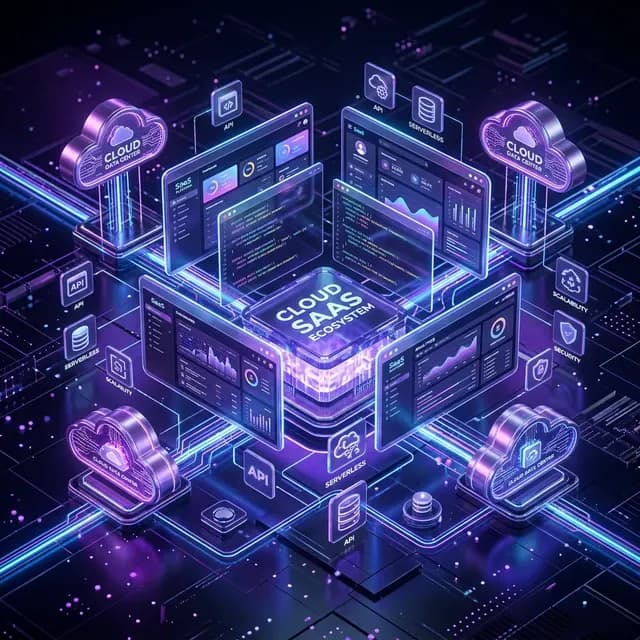
AI writing assistants, intelligent search, code generation tools, documentation AI, and in-product LLM features. From MVP to enterprise scale.
AI for SaaS

E-Commerce & Retail
Product description generation at scale, personalised email campaigns, AI-powered search, and review summarisation. Connected to product catalogues and CMS platforms.
AI for E-Commerce

Legal & Professional Services
Contract analysis, legal research assistance, document summarisation, due diligence automation, and clause extraction — with appropriate human review workflows built in.
AI for Legal

Media & Publishing
AI content pipelines for first-draft generation, transcription, summarisation, translation, and content repurposing at scale. With editorial quality control integration.
AI for Media

FinTech & Financial Services
Financial report generation, regulatory filing drafting, investment research assistance, and client communication personalisation — GDPR and FCA compliant.
AI for FinTech

FREQUENTLY ASKED QUESTIONS
Generative AI FAQs: What Is RAG, How to Prevent Hallucinations, Fine-Tuning, Cost, and ROI
What is generative AI?
Generative AI refers to artificial intelligence systems that create new content — text, code, images, audio, data — by learning patterns from existing data. The most commercially significant generative AI systems are large language models (LLMs) like GPT-4o, Claude, and Gemini, which can write, reason, summarise, classify, and generate at a level of quality that was not commercially available before 2023.
What is the difference between generative AI and regular AI?
Traditional AI systems classify, predict, or detect patterns in existing data — they produce a label, a score, or a decision. Generative AI creates new content from a prompt or input — text, images, code, structured data. Generative AI applications include LLMs, image generators, and code assistants. Both have business value; they solve different problems.
What is RAG in generative AI?
RAG stands for Retrieval-Augmented Generation. It is the technique of connecting a large language model to a knowledge base or document corpus so the model generates responses grounded in your specific data rather than relying entirely on its training knowledge. RAG is the primary technique for making LLMs accurate and reliable for business-specific use cases.
What is fine-tuning and do I need it?
Fine-tuning is the process of further training a foundation model on your own dataset to improve its performance on a specific task, domain, or writing style. You need fine-tuning when your task requires domain-specific vocabulary, a consistent brand voice, or a classification taxonomy that a general-purpose model does not handle accurately out of the box. For most applications, RAG combined with good prompt engineering is sufficient — Automely advises you on the right approach for your use case.
How do you prevent AI hallucinations?
Hallucinations — where an LLM generates plausible-sounding but factually incorrect information — are prevented through RAG grounding (requiring the model to cite sources), output validation layers, confidence scoring, structured output enforcement, and human review workflows for high-stakes outputs. Automely builds all of these safeguards into production generative AI applications.
How much does generative AI development cost?
Generative AI development cost varies significantly by scope — a straightforward LLM integration might take two to four weeks, while a fully custom generative AI product with fine-tuning, RAG, and a frontend application takes considerably longer. Automely provides fixed-scope, fixed-price proposals based on your specific requirements. Book a free consultation for a scoped quote.
What generative AI use cases deliver the highest ROI?
The highest-ROI generative AI use cases are typically: document processing automation (extracting structured data from unstructured documents), customer support chatbots (reducing agent volume), content generation pipelines (producing content at scale without proportional headcount growth), and internal knowledge search (making institutional knowledge instantly accessible). The best use case for your business depends on where your largest operational costs and bottlenecks sit.
How long does generative AI development take?
A focused LLM integration — connecting GPT-4o or Claude to an existing application with prompt engineering and output processing — takes two to four weeks. A RAG system with knowledge base preparation, vector database setup, retrieval testing, and LLM connection takes four to eight weeks. A fully custom generative AI product with its own frontend, backend architecture, fine-tuned model, RAG layer, observability stack, and deployment pipeline takes three to six months. Automely provides fixed-scope, fixed-price proposals for every engagement — you know the timeline before any work begins.
What is the difference between GPT-4o, Claude, and Gemini — which model should I use?
All three are leading large language models with strong reasoning, generation, and instruction-following capabilities. GPT-4o from OpenAI is the most widely deployed model globally — it has the largest ecosystem of integrations, the most community tooling, and strong multimodal capability (text and images). Claude from Anthropic has a significantly larger context window (200K tokens), performs particularly well on long-document analysis, and has strong safety and instruction-following characteristics. Gemini from Google integrates natively with Google Cloud and Google Workspace, and performs well on tasks requiring real-time data access through Google Search integration. For most applications, all three perform comparably. Automely evaluates your specific task profile — context window requirements, cost constraints, compliance needs, and fine-tuning availability — and recommends the right model before any code is written.
Does building a generative AI application share my data with OpenAI or other AI providers?
When using the API of a foundation model provider like OpenAI, Anthropic, or Google, data sent in prompts is processed by their infrastructure. However, API usage under enterprise or business terms does not use your data to train the underlying models — your data remains yours. For businesses with strict data privacy requirements (GDPR, HIPAA, FCA), Automely architects GenAI systems that minimise data exposure: on-premise or VPC-hosted open-source models (LLaMA, Mistral), Azure OpenAI (which gives Microsoft-compliant data residency), or AWS Bedrock deployments. We design the data flow before a single prompt is sent, so compliance is built in from architecture, not patched in after deployment.
Build Generative AI That Works in Production — Not Just in Demos
The gap between a generative AI prototype and a generative AI product that users trust and rely on is an engineering gap. Automely closes it.
- Book a free 30-minute consultation — no pitch, just a focused conversation about your project
- Receive a scoped proposal within 48 hours
- We begin your generative AI build within 5 business days
No lock-in contracts • NDA on day one • USA & UK timezone overlap guaranteed